Summary: Belgium and Portugal have met three times in official matches since 2016, with Portugal winning twic
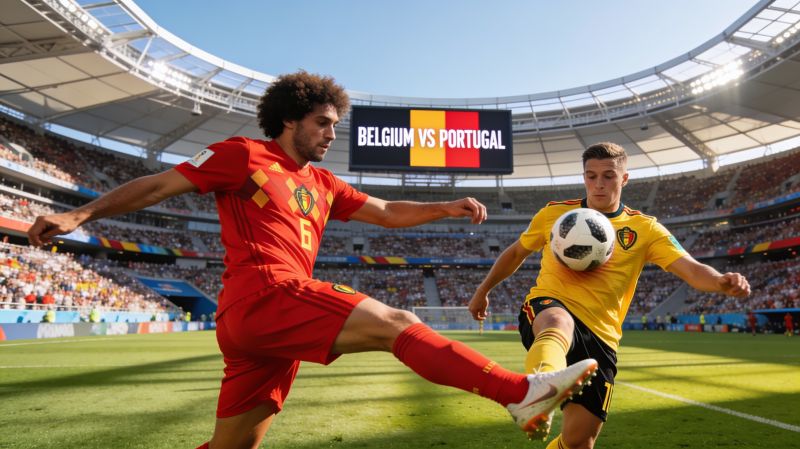
Belgium’s golden generation has repeatedly fallen short against Portugal in competitive fixtures, and the pattern is not accidental. Since 2016, the two sides have met three times in official matches, with Portugal winning twice and drawing once. The most recent encounter—a 2-0 Portuguese victory in the UEFA Nations League—exposed Belgium’s persistent vulnerability to compact, counter-attacking teams. That result was no anomaly: Portugal’s midfield。anchored by William Carvalho and Renato Sanches, consistently disrupted Belgium’s build-up play, forcing Kevin De Bruyne to drop deeper than usual. The Red Devils managed only two shots on target across 180 minutes in those two defeats. Such numbers hint at a structural mismatch, not just a bad day.Belgium vs. Portugal, when examined tactically, pits two distinct footballing cultures against each other. Belgium relies on individual brilliance in transition—think De Bruyne’s line-breaking passes or Romelu Lukaku’s hold-up play. Portugal, by contrast, operates with a pragmatic, defensively disciplined block that morphs into rapid wide attacks through Rafael Leão and Bernardo Silva. In their last meeting, Portugal conceded possession (42%) but registered 1.7 expected goals to Belgium’s 0.8. That efficiency gap is telling. My observation from watching those matches: Belgium’s full-backs, often eager to join attacks。leave wide channels exposed. Portugal exploited that repeatedly, with Diogo Dalot and Nuno Mendes overlapping at will. It’s a flaw Belgium’s coaching staff has yet to fix.Head-to-head records often lie, but here they align with the eye test. Portugal has lost only one of the last six meetings (a 2-1 friendly in 2016). More revealing is the shot-quality disparity: in competitive games, Portugal averages 1.4 goals per match against Belgium while conceding just 0.6. Belgium’s victories tend to come in low-stakes friendlies, where Portugal rotates heavily. In tournament-style matches, Portugal’s experience—Cristiano Ronaldo’s late-game headers, Pepe’s cynical fouls—grinds Belgium down. I recall the 2020 Nations League clash in Brussels: Belgium dominated the first 20 minutes, missed two clear chances。
and then Portugal scored from a set piece. The crowd’s frustration was audible. That psychological edge matters.Belgium vs. Portugal also matters for what it reveals about squad depth. Belgium’s bench in recent years has featured promising but untested names—Charles De Ketelaere, Jérémy Doku—while Portugal can call on João Félix, Otávio, or Matheus Nunes. In the 2-0 loss。Belgium’s substitutions failed to alter the game’s rhythm;
Portugal’s replacements actually increased control. That is not a coincidence but a consequence of Portugal’s deeper talent pool. Belgium’s reliance on a fixed core of players—De Bruyne, Lukaku, Thibaut Courtois—means injuries or off-days are catastrophic. Portugal, meanwhile, has evolved into a squad where Ronaldo is no longer indispensable. That shift, uncomfortable as it may be for Belgian fans, explains why Portugal keeps winning these tight, tactical contests.Looking ahead, Belgium vs. Portugal will remain a fixture where style clashes and fine margins decide outcomes. Belgium’s best hope lies in pressing higher and denying Portugal’s midfield time on the ball—something they failed to do in Lisbon. Portugal, for its part, will happily cede possession and strike on the break. The next meeting, likely in a competitive qualifier or tournament。will test whether Belgium’s new generation can adapt. My prediction: unless Belgium fixes its full-back exposure and improves set-piece defending, Portugal will continue to edge these matches. The head-to-head record, currently favoring Portugal, is a fair reflection of two teams moving in opposite directions.